


Technology
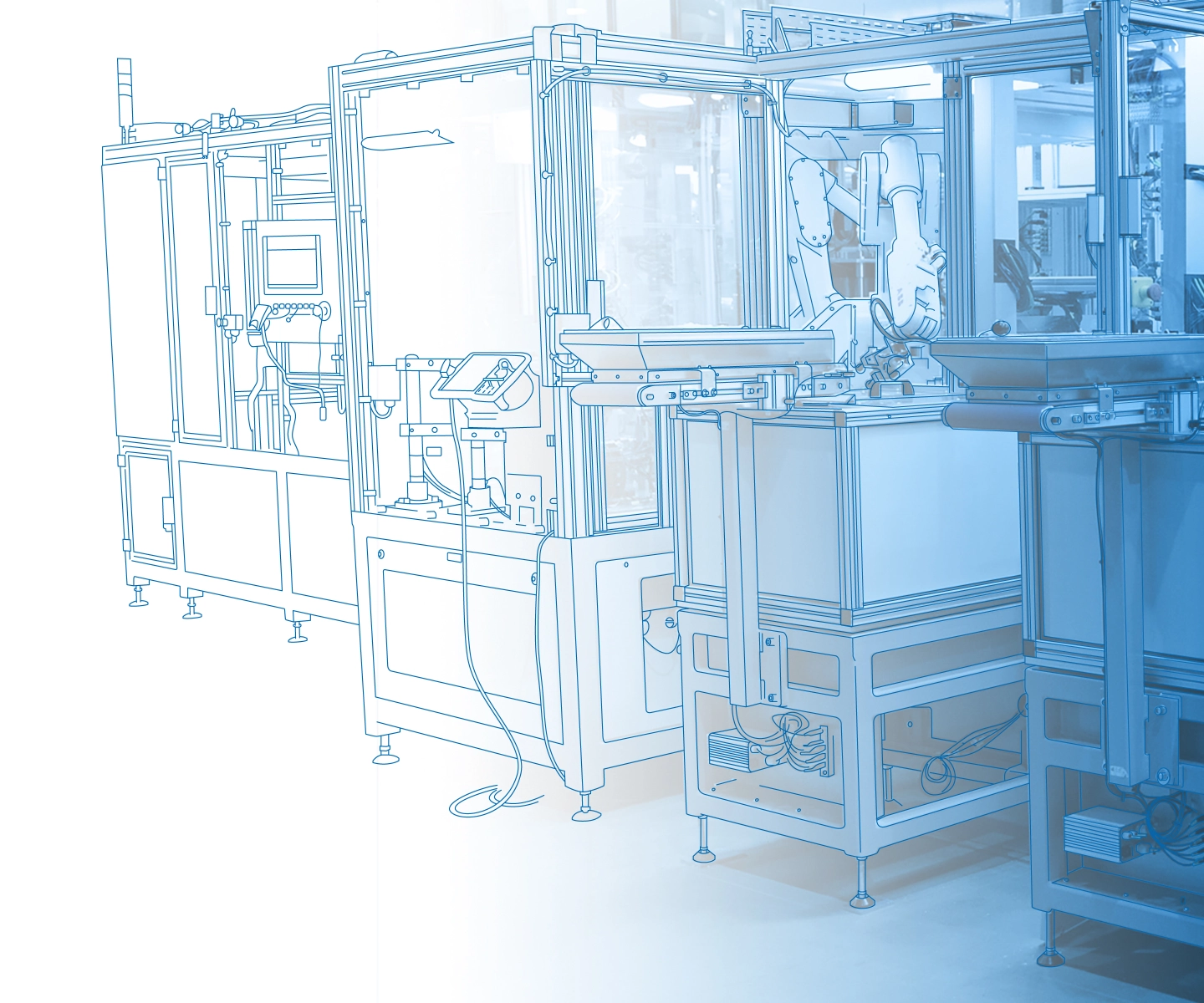
Our assembly technologies are designed to ensure high precision, speed, and reliability at all stages of the manufacturing process. These technologies enable smooth and efficient automation of assembly tasks, thereby increasing productivity and reducing error rates. Individual solutions include advanced systems for automatic screwdriving, component feeding, and other assembly processes that are easily scalable and adaptable to the specific needs of each customer.
Screwdriving
Screwing systems ensure precise and repeatable tightening of joints according to specified parameters. Modern screwing technology allows for monitoring torque and tightening angle to control joint quality. Automatic screwing systems are designed for unattended operation on a robot, manipulator, or stationary in an automatic station.
Pick and Place
Pick and Place systems automatically handle components, transferring them from feeders to the target position. They typically use robotic arms or portal manipulators. This technology increases the speed and accuracy of product assembly.
Servo Conveyors
Servo conveyors are advanced conveyor systems using individually controlled sections with separate drives, serving to transport products between individual production stations. They can be belt, roller, chain, or magnetic. They optimize material flow and minimize manual handling.
Part feeding and orientation
Part feeders provide automatic entry of components into the production equipment, using vibratory or step feeders or input from blister packs via a tray feeder.
Riveting
Riveting technology serves for the permanent mechanical joining of parts using rivets. Modern machines enable controlled rivet forming and process monitoring. It is used where gluing or welding is not suitable.
Gluing
Automated gluing includes dispensing and applying adhesives of various viscosities to precisely defined areas. Important factors are dose control, trajectory accuracy, and open time of the adhesive. The technology ensures strong and tight joints.
Lubrication
Lubrication technology ensures precise dosing of lubricants (oils, greases) to exposed areas of products to reduce friction and wear. The systems allow controlled application in the form of spot dosing, coating, or spraying.
Crimping
Crimping technology is a method for joining two components, usually a wire and a connector, by mechanical compression, forming a strong and reliable connection without soldering. Automatic crimping machines ensure high-quality joints, force monitoring, and correct crimp position.
Conveyor systems
Conveyor systems use pallet carriers that ensure correct orientation and product protection during transport. This system is suitable for products sensitive to position or handling and allows easy integration of identification and inspection technologies.
Pressing
Pressing technologies use pressure forces to form or join materials. In automation, they are used for example when pressing bearings, joining plastic and metal parts, or shaping components.
We use a wide range of advanced manufacturing technologies that ensure maximum precision and efficiency. Our technologies include machining, grinding, welding, soldering, and other processes that are integrated into automated systems to achieve top quality and reliability at all stages of production.
PCB Miling
PCB milling involves precise mechanical machining of the board substrate to create grooves, holes, or edge shaping. The technology is used where laser cutting is not suitable.
Grinding
Grinding is a machining process using a rotary grinding wheel, which achieves high surface quality and dimensional accuracy. It is used for final processing of both metal and non-metal parts.
Milling machines
Milling machines are machines designed for chip machining of materials using a rotary tool – the milling cutter. They are used for precise processing of flat and shaped surfaces in metalworking and electrical engineering.
Potting
Potting is the process of encapsulating electronic components in resin for mechanical protection, thermal management, or electrical insulation. Application is performed by controlled dispensing directly on the production line.
Ultrasonic welding
This technology uses high-frequency vibrations for local melting and joining of plastic parts without the need for additional material. The advantages are short cycle, clean joint, and minimal thermal load.
Laser welding
Laser welding enables precise and rapid joining of metal parts with minimal heat-affected zone. The technology is suitable for fine joints, for example in automotive or electrical engineering.
Resistance welding
Resistance welding joins metal parts by passing an electric current, which generates heat at the joint. Its advantages are simplicity, speed, and repeatability of the process.
Soldering
Soldering consists in joining metal parts using a molten filler metal with a lower melting point than the base material. In industrial automation, both soft and hard soldering are used, including wave soldering or selective soldering.
Our EOL (End-of-Line) testers are designed to ensure the highest quality and reliability of products at the end of the manufacturing process. These testing systems are used to thoroughly verify the functionality, accuracy, and performance of individual products before they are shipped. EOL testers can detect any deviations or defects, ensuring that all products meet strict quality standards.
Vision systems
Industrial vision systems are used for quality control, dimension measurement, and defect detection. They use 2D or 3D cameras combined with machine vision and artificial intelligence. They enable fast and contactless inspection.
Hight voltage tests
High voltage tests (HiPot) verify the insulation strength of products by exposing them to higher-than-normal operating voltage. They detect breakdowns, dangerous leaks, and confirm device safety.
Insulations tests
Insulation tests measure the resistance between electrically separated parts of a device, verifying the correctness and safety of insulation. They are part of standard inspection protocols, mainly for electrical devices.
Electrical tests
General electrical tests include measuring resistance, current, voltage, and other electrical parameters. They are used for checking both individual components and complete assemblies during the production process.
Flashing
Flashing means loading firmware or software into electronic devices during production. The process includes verifying write integrity and often a basic functional test of the device after programming.
Calibration
Calibration processes serve for setting and verifying the correct function of measuring and control systems of devices. Calibration can be manual or automatic and is performed according to defined standards.
Communication testing
This technology verifies the correctness and stability of data communication between devices. It includes simulation of real operation and analysis of communication protocols, e.g., CAN, Ethernet, or Modbus.
3D measurement
3D measurement serves for precise evaluation of product geometry using cameras, laser scanners, or coordinate measuring machines (CMM). It allows real-time control of tolerances and dimensional stability.
Mechanical tests
Mechanical tests evaluate the physical properties of products, such as strength, stiffness, or wear resistance. They typically include load tests, torque measurements, fatigue tests, and more.


